Surplus Lines 101
Understanding surplus lines insurance and its role in Florida’s insurance marketplace.
Complimenting the Insurance Marketplace
What Is Surplus Lines Insurance?
Insurance works best when there are options for all kinds of risks. Most homes, businesses and other property and liability risks can be insured through the traditional, or “admitted,” insurance market. But some risks are more complex, unusual, emerging or difficult to place. That’s where surplus lines insurance comes in.
Surplus lines serve as a safety valve for the insurance marketplace — complementing, not replacing, the admitted market. When a risk doesn’t fit within the traditional market, surplus lines insurers have the flexibility and specialized expertise to develop solutions that can help fill the gap. That might mean insuring a coastal property with unique exposures, a business with specialized operations, a large or complex commercial risk, or even an emerging risk for which a traditional insurance product may not yet exist.
An Important Piece of the Insurance Puzzle
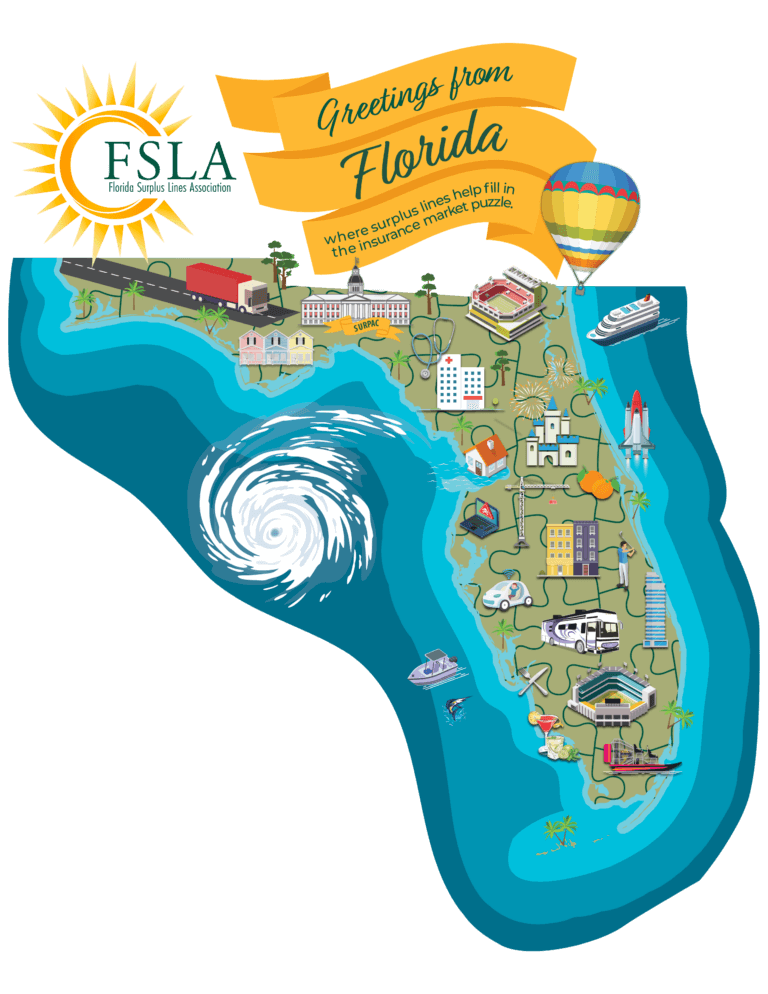
Think of Florida’s insurance marketplace as a puzzle. The admitted market makes up a significant part of the picture, but it cannot always address every risk. Surplus lines help complete the puzzle, providing another source of capacity and coverage for risks that may otherwise be difficult to insure.
A key part of that role is the surplus lines market’s freedom of rate and form. Unlike admitted insurers, surplus lines insurers generally do not have their individual policy rates and forms approved by Florida regulators. This flexibility allows specialized insurers to respond to complex and changing risks by tailoring coverage, terms and pricing to the exposure. It is one reason the surplus lines marketplace has historically been an incubator for innovative insurance solutions, including coverage for risks that may later become more widely available in the admitted market.
Regulated Differently
Surplus Lines are regulated differently because the industry serves a markedly different purpose: insuring what the standard or residual market cannot, or will not. Surplus lines insurers have several sections of Florida law that govern their behavior and regulatory compliance, including perhaps most notably, the same laws applicable to the standard insurance market regarding fair dealing and trade practices.
Surplus lines agents are also independent insurance professionals regulated in the exact same way retail insurance agents are regulated. More than one thousand surplus lines agents routinely work with retail agents across the state to help unserved or underserved people and businesses looking for coverage. Licensed agents are best suited to match their customers with the most appropriate risk management options, and their credentials can be verified using the resources available at www.myFloridaCFO.com.
Built to Fill the Gaps
Surplus lines insurance is not simply insurance for the unusual. It can play an important role wherever the traditional marketplace does not have the appetite, capacity or flexibility to address a particular risk.
In a state as large, diverse and dynamic as Florida, that flexibility matters. From homes and businesses to hospitality, construction, transportation, marine risks and emerging industries, surplus lines help keep insurance options available as risks and markets evolve.
The admitted and surplus lines markets are different, but they are interconnected pieces of a healthy insurance marketplace. When one market cannot provide the right fit, surplus lines can step in — helping keep coverage available, supporting economic activity and strengthening Florida’s broader insurance ecosystem.
Learn More About Surplus Lines
FSLSO: Understanding Florida's Excess & Surplus Market
This is particularly useful for consumers because it explains the Florida market with straightforward examples such as coastal homes, yachts and higher-risk businesses.
NAIC: Surplus Lines Overview
A good national-level resource explaining how the market works, how it is regulated and why specialized surplus lines insurers exist.